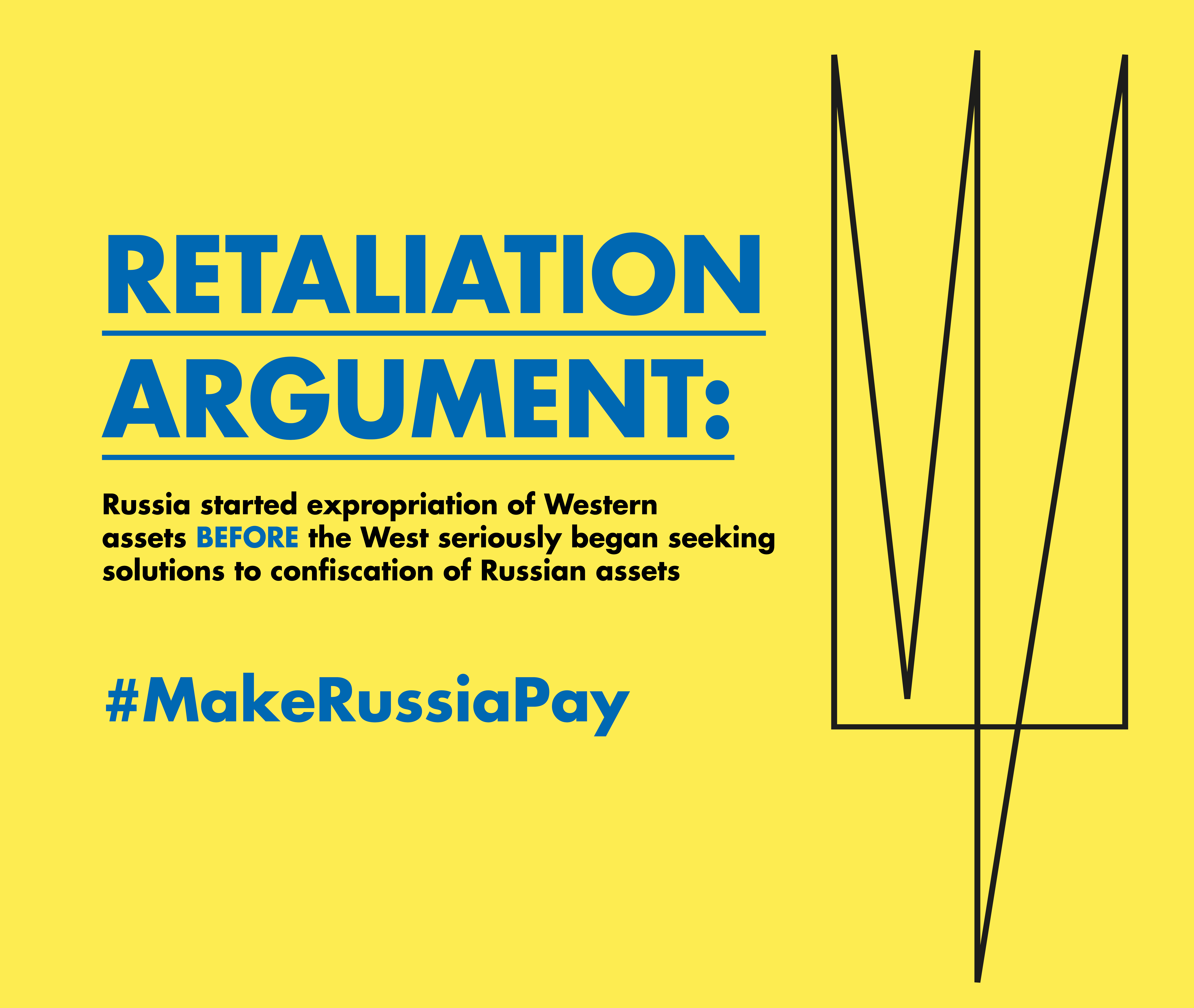
Before the end of 2023, US, UK, and EU officials, along with prominent Western experts, intensified high-level discussions regarding potential confiscation of the Russian Central Bank’s assets (RCB assets). Russia swiftly responded with stern threats. Both Putin’s spokesman, Dmitry Peskov, and Finance Minister Anton Siluanov publicly asserted that in the event of such confiscation, Russia would take “symmetric measures,” involving the confiscation of US and European assets in Russia, as reportedly outlined in already compiled lists. This aggressive reaction indicates that Russia currently considers the likelihood of confiscating its RCB assets as plausible. It also acknowledges that repurposing Russian assets at this stage would significantly weaken Russia’s capacity to subjugate Ukraine by relying on the presumed Ukraine fatigue in the West.
As a result, the Russians are resorting to tactics involving blackmail and hostage-taking to dissuade G7 partners from pursuing this idea. However, in practice the Russian government has begun de facto confiscation of Western companies’ assets on a large scale much earlier, unrelated to the potential Western confiscation of the RCB assets (e.g. Danone, Carlsberg, ExxonMobile etc). The process started in early days of the full-scale war with restrictions on dividend payments from securities and ultimately progressed to gaining full control over market exits and asset sales pricing. Many companies have fallen under control of Putin’s allies, with some being effectively expropriated without any compensation provided.
Consequently, there appears to be no viable path for companies remaining in Russia to conduct normal business activities in the future. This is compounded by substantial ethical considerations, as these businesses are contributing with their taxes to aggression and war.
Furthermore, in the instance of successful hostage-taking blackmail, further retaining of Western assets in Russia would become a significant leverage against any Western decision on supporting Ukraine or even the reparation talks in the future.
Hence, the sole viable option for these companies is to withdraw from the Russian market and expedite their contribution to the fast Ukrainian victory. In the event of losing assets in Russia, the most effective recourse for such companies lies in challenging illegal expropriation through investment tribunals. Other options might be special programs offered by the national governments to support such businesses or applying to the Compensation mechanism. Ultimately, the post-war reconstruction of Ukraine and the revitalization of the Ukrainian business environment present a significant opportunity for Western companies to recover and could potentially surpass the amounts of their lost profits.
Read the full brief with solutions on the issue of FEAR OF RETALIATION
