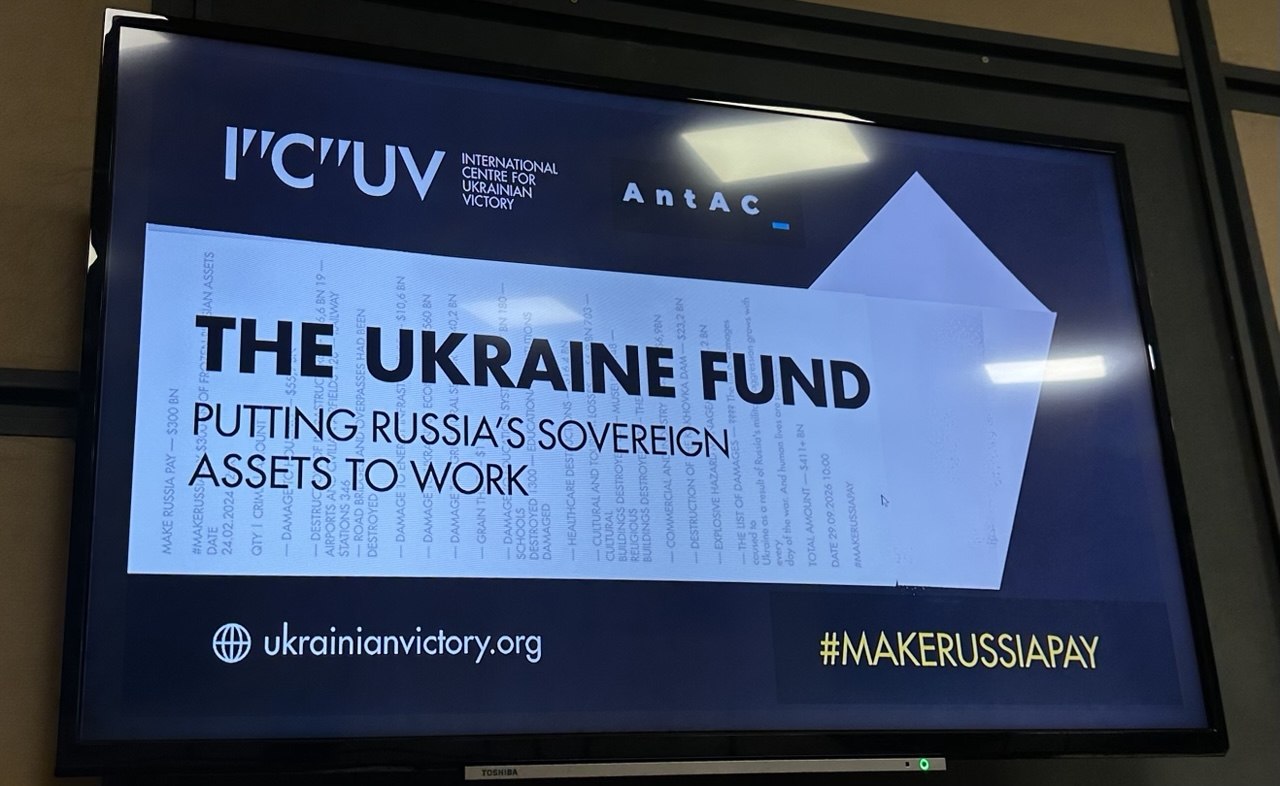
On September 29, the International Centre for Ukrainian Victory hosted a closed-door diplomatic breakfast in Kyiv titled “THE UKRAINE FUND. Putting Russia’s Sovereign Assets to Work.”
The event presented a new study by the International Centre for Ukrainian Victory and the ANTS Network Decolonization NGO. Its authors are Olena Halushka, ICUV Co-founder, and Andrii Mikheiev, Chief International Law Expert at ICUV. The meeting was held under the Chatham House Rule, which allowed for an open and substantive exchange of views.
The full and short versions of the study are available here.
Representatives of 12 embassies and independent security experts came together to discuss how to make effective use of the Russian Central Bank’s immobilised assets, currently estimated at around €290 billion. Almost €210 billion of that is held in EU jurisdictions, specifically at the European depository Euroclear.
Olena Halushka said that freezing Russian assets indefinitely is no longer enough as an end goal. It does the bare minimum by keeping Russia from accessing the assets for now. But it doesn’t guarantee they will be preserved as a long-term resource for Ukraine, and it doesn’t protect against Russia getting them back if the political situation in Europe changes dramatically.
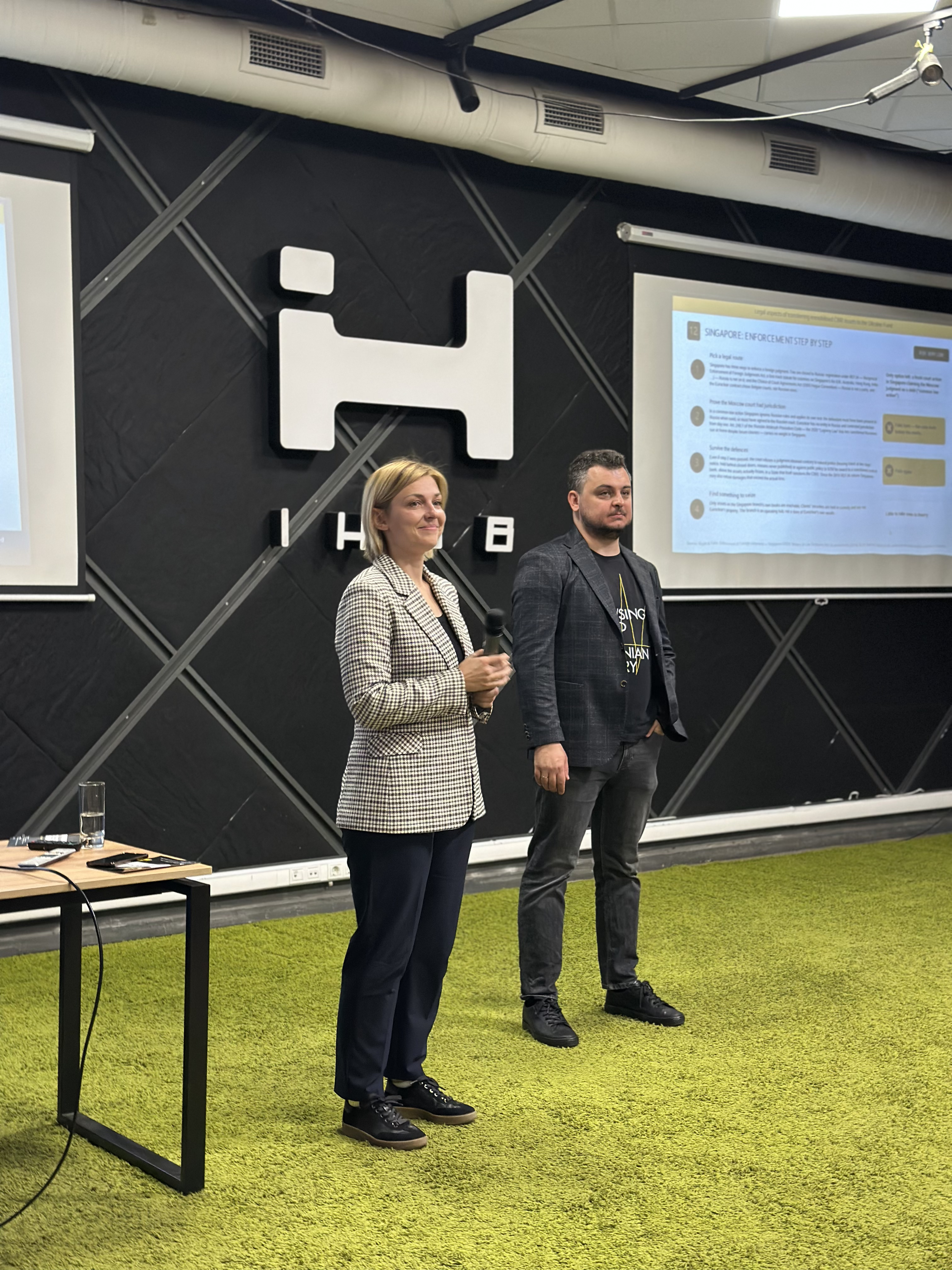
There is a new approach: transfer the assets to a purpose-built structure, the Ukraine Fund, and start putting them to more productive use before the political and legal questions around confiscation are finally settled. The objective is to transform €290 billion in CBR assets into a long-term financial resource capable of helping Ukraine secure its victory, compensate the victims of Russian aggression, rebuild the country and sustain the economic and defence capabilities required to make that victory durable.
“Russia has always relied on cutting Western assistance to Ukraine and making sure that we are left alone. Having this Ukraine Fund long-term capitalized would be an important guarantee to make sure that even if the war ends, it does not restart in five or seven years because Ukraine has sufficient resources to continue fighting. So this will serve as a long-term deterrence, super important,” Olena Halushka stressed.
The Ukraine Fund should follow a hybrid model. It would combine long-term preservation of capital with the carefully structured use of its financial capacity, rather than sitting at either extreme: a traditional sovereign fund, or a one-off pool of money that gets spent quickly.
Andrii Mikheiev presented the legal aspects of transferring immobilised Russian central bank assets to the Fund. He explained that the Fund could be structured so that Russia keeps formal ownership rights, while custody and economic management of the assets pass to a dedicated vehicle.
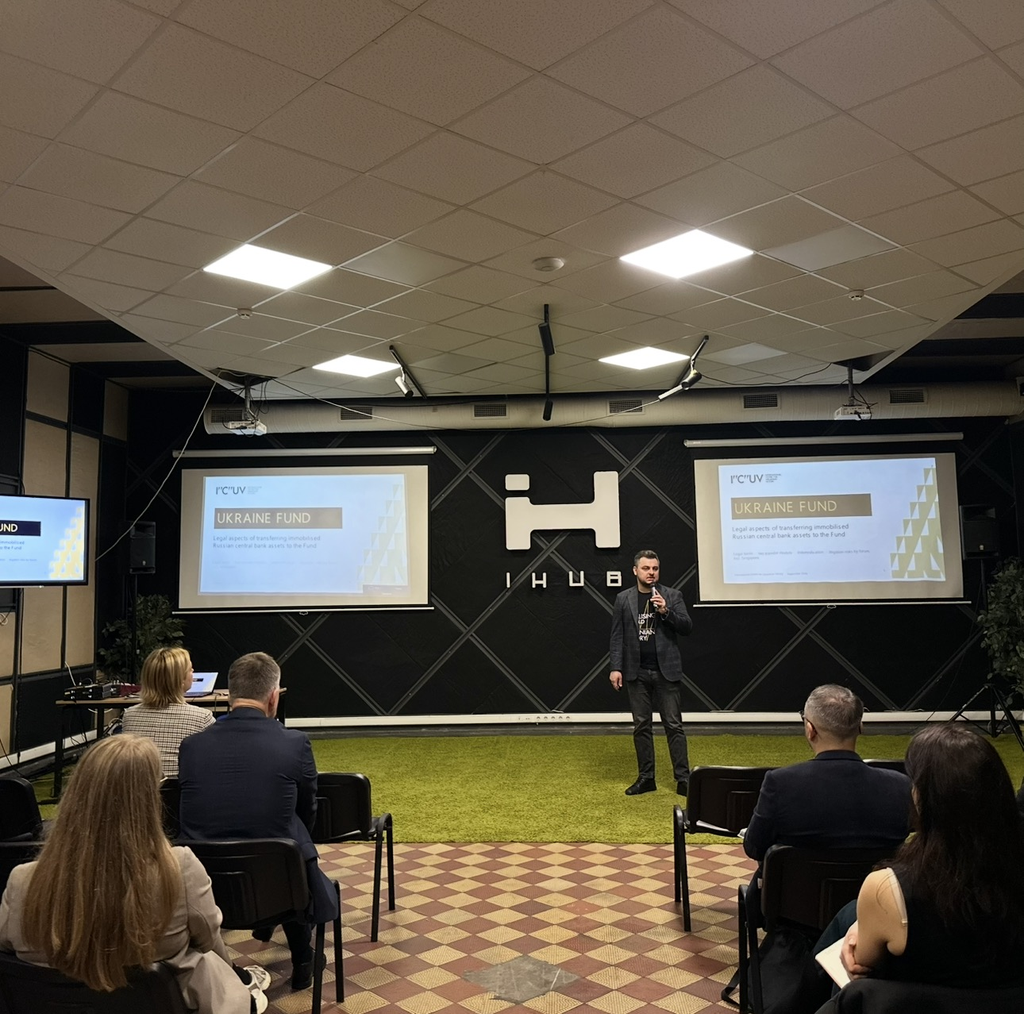
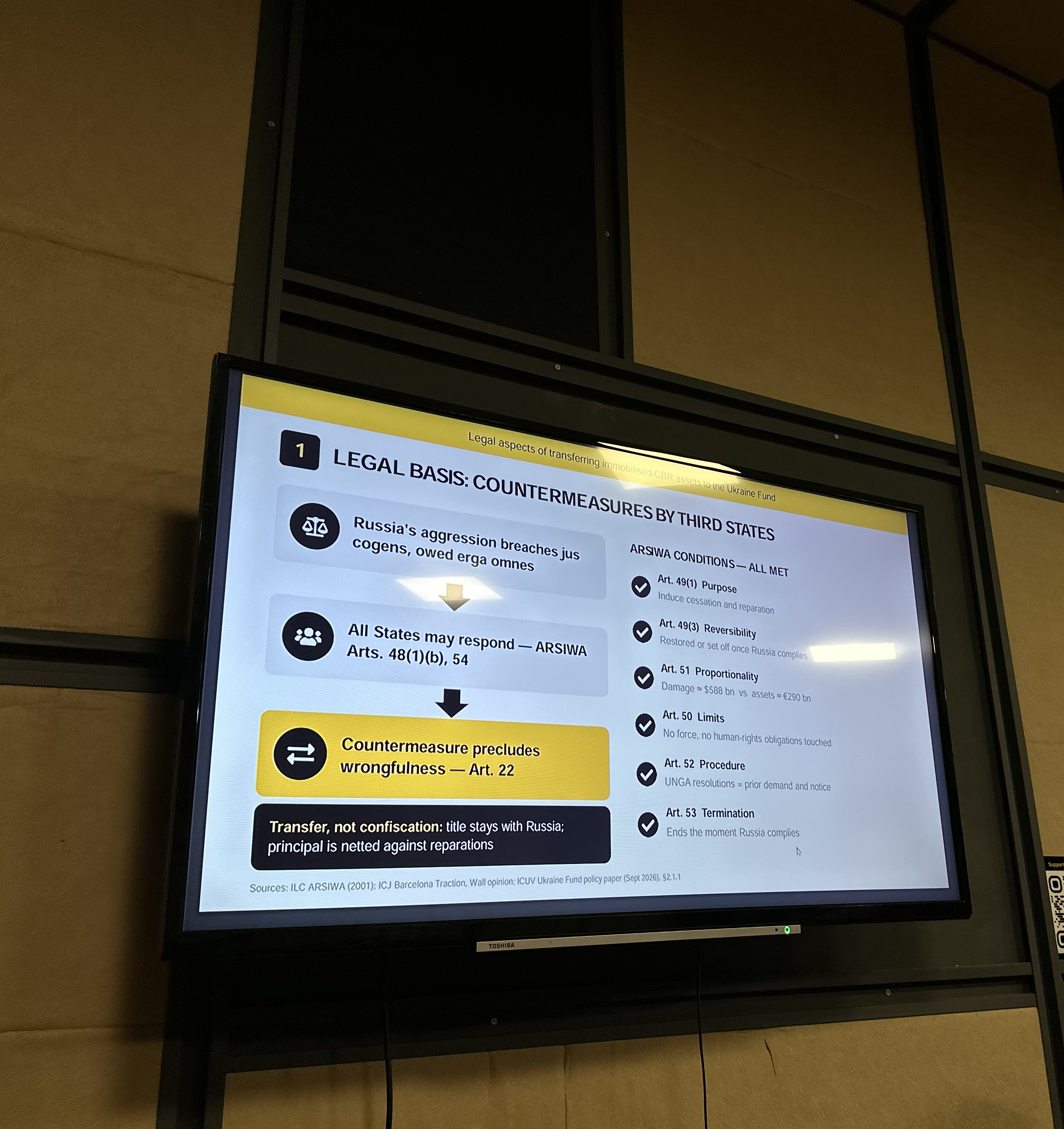
The legal analysis looks at international countermeasures, a “bad bank” structure and an EU special-purpose vehicle established under Article 122 TFEU as possible components of this architecture. Any principal the Fund deploys could later be replenished from reparations paid by Russia, or set off against Russia’s outstanding reparation obligation. The study also looks in detail at the potential risks and ways to protect against lawsuits from Russia in European courts, investment arbitration and third-country jurisdictions, including Singapore.
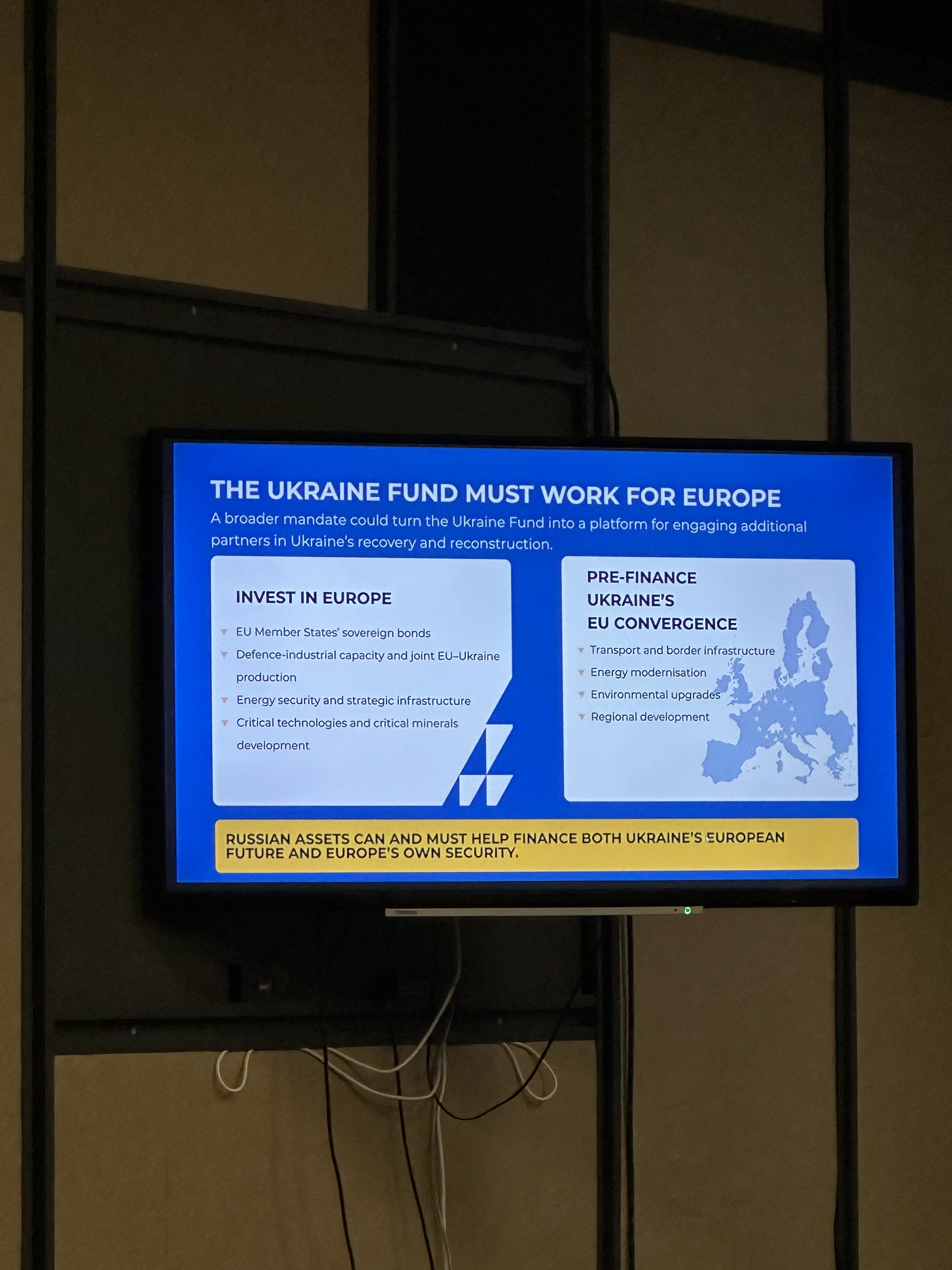
In addition, the study stresses that the Ukraine Fund should be designed to serve Europe’s wider interests too. Part of its investment portfolio could go into high-quality European financial assets, strategic infrastructure, energy security, defence-industrial capacity, critical technologies and joint European-Ukrainian defence production, as well as bonds of EU member states. This would let the CBR assets fund Ukraine’s recovery while also strengthening Europe’s own economic resilience and its long-term deterrence capabilities.
We are sincerely grateful to everyone who joined the discussion and shared their insights. ICUV remains firmly committed to maintaining trusted spaces where diplomats, analysts and decision-makers can assess strategic risks and coordinate responses to ongoing security challenges.